Archives: Technology

  • Single-photon source

    A single-photon source is a special type of light source that does not emit light in large quantities, but instead releases individual particles of light—called photons—one at a time. This is particularly challenging, because ordinary light sources such as lamps or lasers always produce many photons simultaneously.

    Single photons are essential for modern quantum technologies. In quantum communication, for example, they can be used to transmit information with absolute security. Any disturbance of a single photon can be detected, which enables entirely new standards of data protection.

    To generate single photons, special materials or artificial structures are used, such as individual atoms, solid state, or so-called quantum dots. These systems emit light in a highly controlled manner. As a result, they form an important foundation for future technologies such as quantum computers and quantum networks.

    Single-photon sources are an excellent example of how precisely modern physics can operate today. They show that light does not have to be understood only as a continuous beam, but can also be described as consisting of individual, measurable particles.


  • Photonics chip

    Photonics chip

    A photonic chip is a small device that uses light instead of electrical current to process or transmit information. In conventional electronic chips, electrons move through tiny wires. In photonic chips, information is carried by particles of light, called photons.

    Light has important advantages: it can transmit data extremely fast and produces less heat than electrical signals. This makes photonic chips especially useful for modern communication technologies, such as the internet, data centers, and medical systems.

    On a photonic chip, microscopic structures guide, split, manipulate, or detect light. These structures are often only a few thousandths of a millimeter in size, yet they can perform very complex tasks.

    Photonic chips have the potential to make computers faster and more energy-efficient and play an important role in emerging quantum technologies. They show how light can be used not just to illuminate the world, but to power advanced technology.

  • Optical tweezers

    Optical tweezers

    Optical tweezers are a fascinating tool that allows scientists to trap and move tiny objects using light alone. A strongly focused laser beam is used to hold very small particles, such as cells or atoms, in place. When the laser hits the particle, a force acts on it and keeps it trapped at the center of the light beam. By moving the laser beam, the trapped object can be moved precisely without being touched. This is especially important when working with delicate biological samples.

    Optical tweezers are widely used in physics, biology, and medicine. They make it possible to study individual cells, stretch DNA molecules, or measure extremely small forces.

    Arthur Ashkin received the 2018 Nobel Prize in Physics for, among other things, the invention of optical tweezers. Optical tweezers demonstrate that light is not only useful for seeing or transmitting information but can also exert forces. They are a powerful example of how fundamental research leads to innovative tools.

  • Polarization

    Polarization

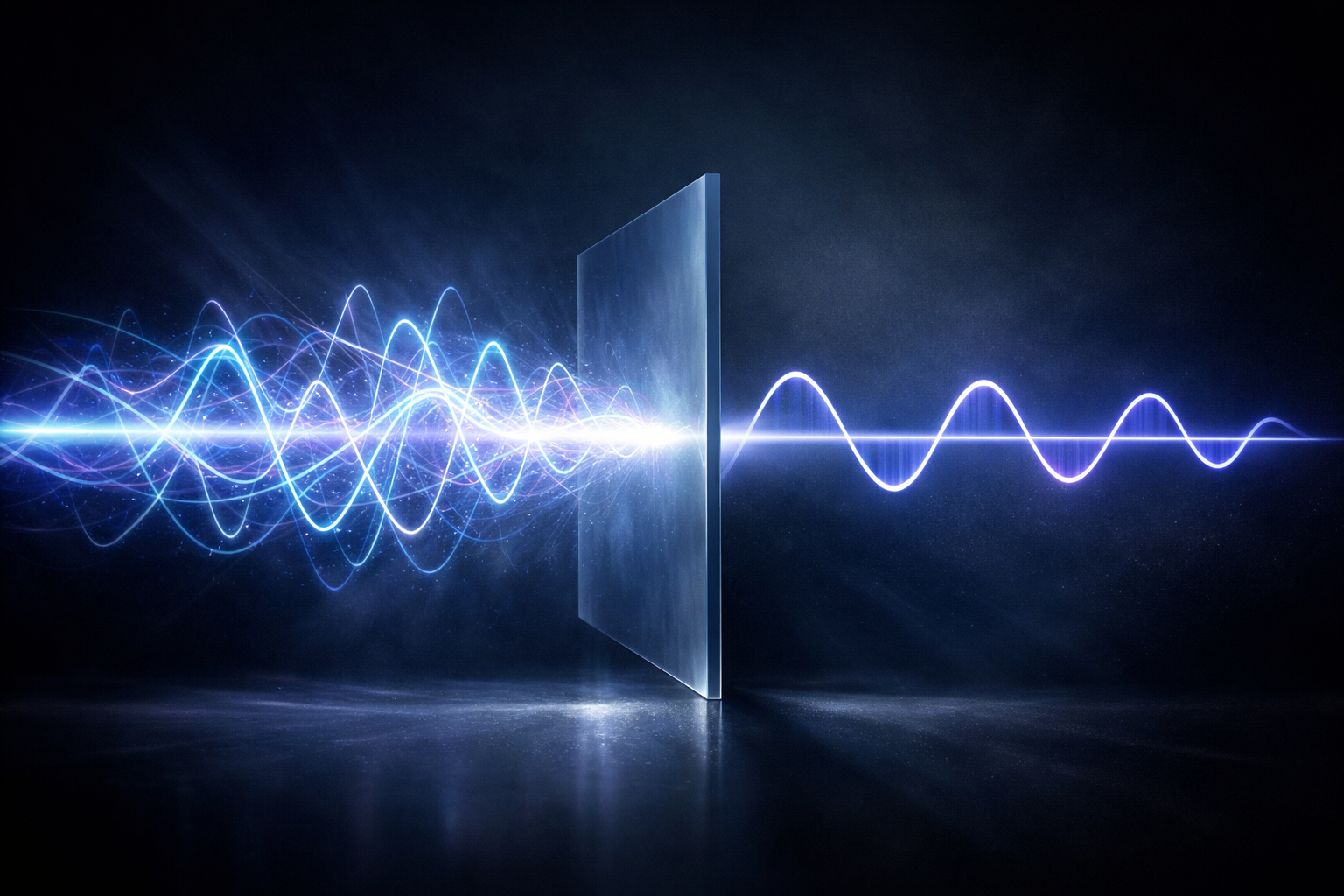
    Polarization describes a special property of light. Light can be imagined as a wave, similar to a wave traveling along a rope. Sunlight, for example, oscillates disordered in many different directions. In polarized light, however, the oscillations are ordered and occur only in one specific direction.This ordered state can be created deliberately, for example by using a polarization filter.

    Such filters are commonly found in sunglasses and displays. They help reduce unwanted reflections and make colors in photographs appear more vivid. Polarization also plays a central role in 3D cinema: two images with different polarizations are projected onto the screen simultaneously. Special 3D glasses ensure that each eye sees only one of these images. The brain combines them to create a three-dimensional impression.

    Polarization also occurs in nature. Some animals are able to detect polarized light and use it for orientation or for recognizing members of their own species.

    Beyond these everyday applications, polarization is an important building block of modern quantum technologies. In quantum cryptography, quantum communication and quantum optics, the polarization of individual particles of light—so-called photons—is deliberately used to store, transmit, and measure information. Because polarization can be controlled with high precision, it is particularly well suited as a carrier of quantum information.

    Polarization thus clearly demonstrates that light has far more properties than we can perceive with the naked eye and that these properties play an essential role in the technologies of the future.

  • Quantum tunneling

    Quantum tunneling

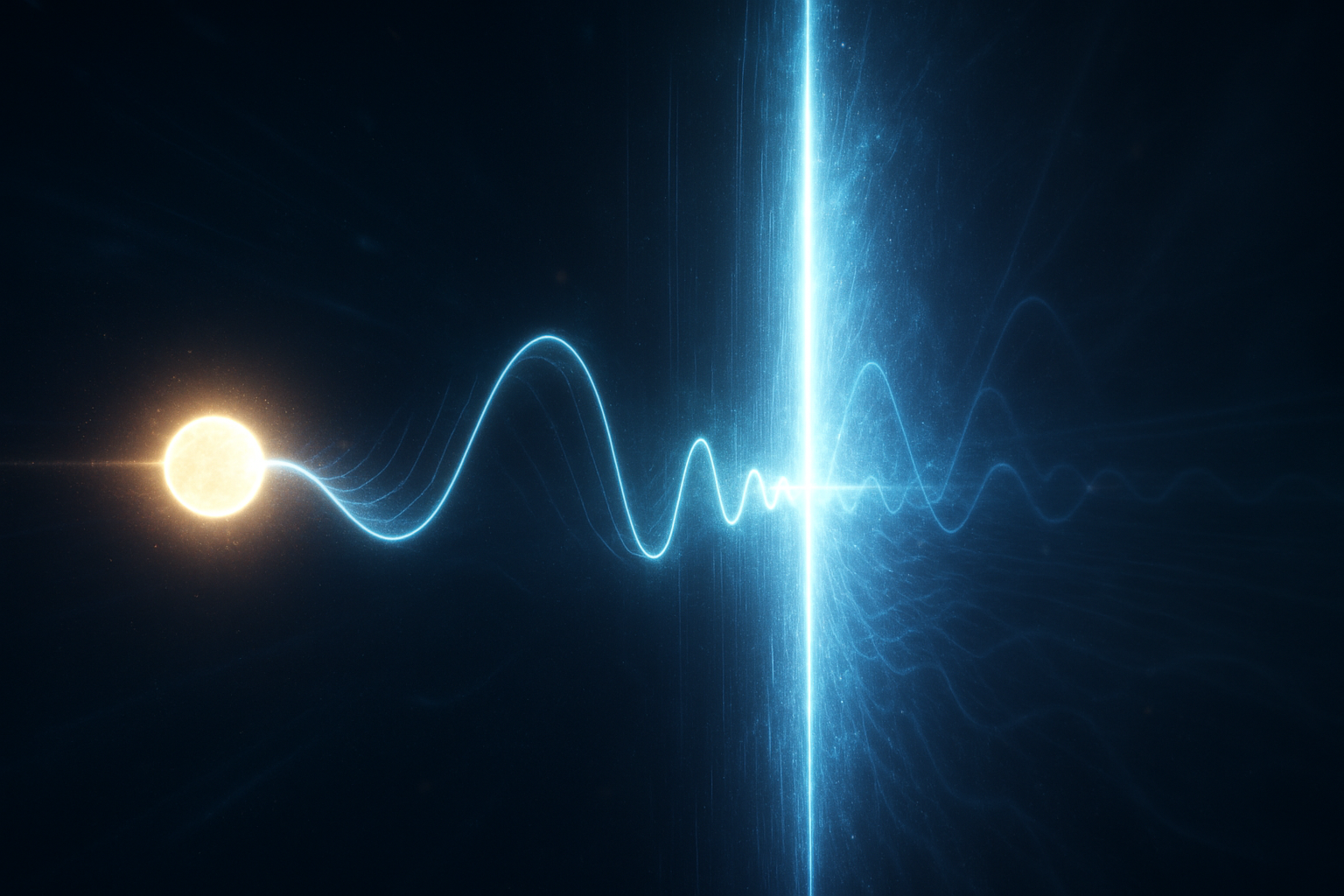
    Quantum tunneling is a phenomenon from quantum physics that sounds almost impossible at first: particles can pass through barriers even though, according to everyday logic, they should not have enough energy to do so. In our daily experience, this would be like a ball passing through a wall without breaking it. In the world of very small particles, however, this can actually happen.

    The reason lies in the fact that particles such as electrons are not just tiny solid objects. They also behave like waves. These waves can extend slightly into a barrier. If the barrier is thin enough, there is a certain probability that the particle will appear on the other side. This process is called “tunneling”.

    Quantum tunneling is not just a theoretical exception. It plays an important role in many modern technologies. Without quantum tunneling, devices such as computer chips, scanning tunneling microscopes, or many quantum technologies would not work. It also occurs in nature, for example in nuclear reactions inside the sun. This phenomenon impressively demonstrates how much the laws of the quantum world differ from our everyday experience—yet they have a real-world impact on our lives.

  • Entanglement

    Entanglement

    Entanglement is a special phenomenon in quantum physics in which (to put it simply) two or more quantum objects are connected in such a way that the state of one quantum object is immediately linked to the state of the other, no matter how far apart they are.

    This means that if you measure the state of one quantum object, you immediately know the state of the second, entangled quantum object—even if it is on the other side of the earth. Entanglement may sound as if two quantum objects can communicate with each other instantly, but in fact it cannot be used to transmit information faster than light. The reason for this lies in the rules of quantum physics:

    1. Random results: When measuring the state of an entangled quantum object, the result is random. Only by comparing the measurement results with those of the other quantum object can one see that they are correlated.
    2. Classical communication required: To exchange the measurement results and determine the correlation, classical signals must be used, which travel at most at the speed of light.
    3. No controllability: It is not possible to arbitrarily influence the result of a measurement in order to send a specific message. Entanglement only ensures that the results are connected to each other, not that they can be specifically controlled.

    In short: entanglement creates instantaneous correlations, but no controllable communication. Information therefore still cannot be transmitted faster than light – the theory of relativity remains valid.

    The phenomenon of entanglement contradicts our everyday experience, in which things normally only have a local effect, and was described by Albert Einstein as “spooky action at a distance.”

    Entangled particles are very important for quantum computers and quantum communication because they enable information to be transmitted or processed in a completely new, extremely secure way.

  • Vacuum

    Vacuum

    A vacuum is a space in which there is almost no matter — i.e., hardly any air, particles, or molecules. You can imagine it as an empty space in which there is nothing to feel or see.

    Vacuum is used in many areas: in space research, in laboratories, in electronics, and in vacuum packaging to protect materials from air or moisture. A truly perfect vacuum hardly exists in practice, but it is possible to create very empty spaces in which physical experiments can be carried out that would not work under normal conditions.

    In quantum physics, a vacuum is needed so that tiny objects can be studied undisturbed. With air or other particles, atoms, ions, or electrons would constantly collide and lose their quantum states.

    Here are some examples of where vacuums are needed in modern laboratories to perform quantum physics experiments:

    1. Atomic traps and laser cooling: In order to trap individual atoms and slow them down to extremely low temperatures, the environment must be free of air molecules. Otherwise, the atoms would be disturbed by collisions.
    2. Ion traps and quantum computers: Individual ions (charged atoms) are held in traps and used as qubits. A vacuum prevents them from colliding with gas particles, which would destroy the quantum states.
    3. Electron and particle beam experiments: In electron microscopes or in the study of individual quantum particles, a vacuum ensures that the particles fly straight ahead unhindered, without being deflected by air molecules.
    4. High-precision measurements: In experiments that measure extremely fine forces, fields, or quantum states, a vacuum reduces noise and interference from the environment.

  • Mirror

    Mirror

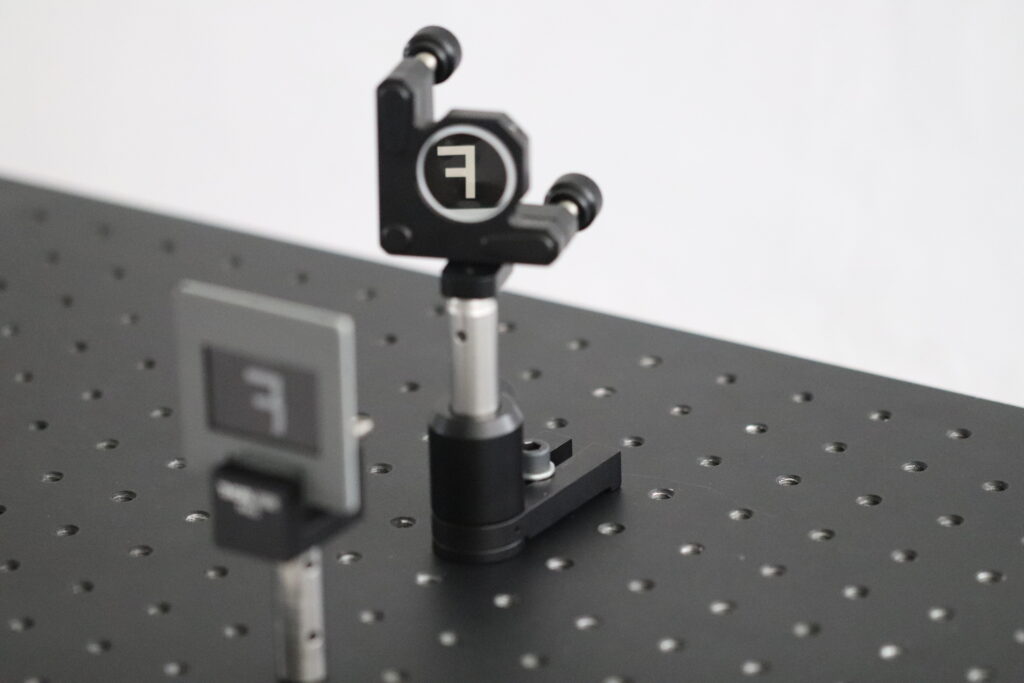
    A mirror is a smooth, reflective surface that reflects light. When light hits the mirror, it is reflected in a specific direction, allowing us to see an image of everything in front of the mirror.

    Mirrors come in many shapes and sizes: bathroom mirrors, car mirrors, telescope mirrors, or even precision mirrors in scientific equipment. The smoother the surface, the clearer and more accurate the reflected image.

    Mirrors are almost always needed in optical setups in research laboratories. This is also the case, for example, when setting up an experiment with individual quantum objects.

  • Qubit

    Qubit

    A qubit is the smallest unit of information in a quantum computer – comparable to the classic bit in normal computers. While a bit can either have the value 0 or 1, a qubit can be both 0 and 1 at the same time. This phenomenon is called superposition.

    In addition, qubits can be entangled with each other, so that the state of one qubit is directly linked to that of another, even if they are far apart. These properties enable quantum computers to perform certain calculations much faster and more efficiently than classical computers.

  • Photon

    Photon

    A photon is a tiny object that carries light or other forms of electromagnetic radiation. Photons can be thought of as small “packages” of energy that travel at the speed of light.

    Photons have special properties: they sometimes behave like particles and sometimes like waves, depending on how they are observed. This property is called wave-particle duality.

    Photons are all around us: they enable us to see, allow plants to photosynthesize, make lasers work, and enable light bulbs and LEDs to produce light. In quantum physics, photons are also used to transmit quantum information, for example in quantum communication or quantum computers.