Archives: Technology

  • Magnetic field

    Magnetic field

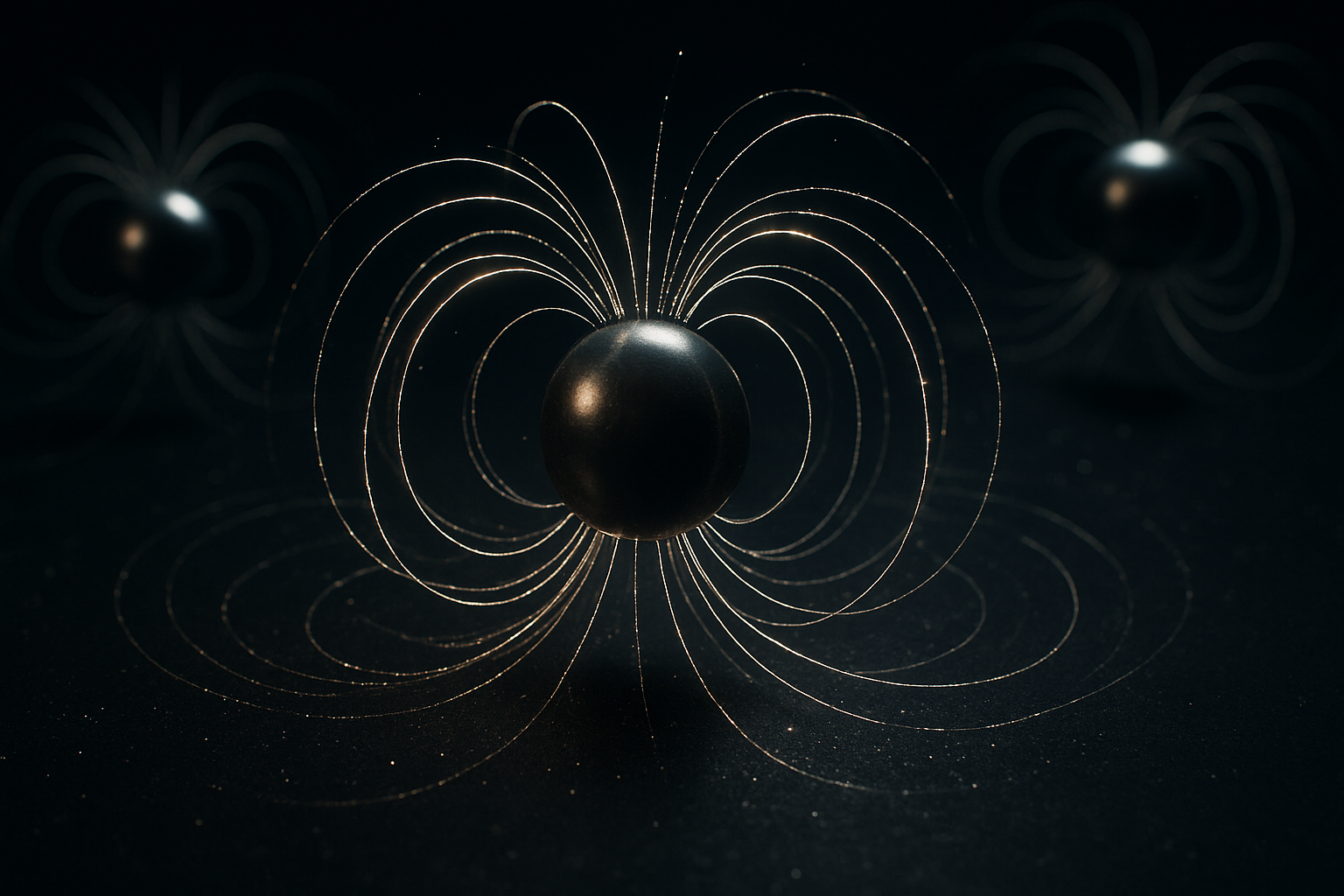
    A magnetic field is an invisible area around a magnet or a wire carrying electric current in which other magnets or electric currents experience forces. You can imagine a magnetic field as a kind of “invisible cloud of force” that influences the space around the magnet.

    Magnetic fields are important in our everyday lives: they ensure that compass needles point in the right direction, electric motors work, and data can be stored on hard drives. The earth itself also has a huge magnetic field that protects us from harmful solar radiation.

  • Lens

    Lens

    A lens is a transparent piece of material that focuses or scatters light rays to create or alter images. A lens can be thought of as a curved disc: depending on whether it is curved outward or inward, it can collect light (convex) or scatter it (concave).

    Lenses are used in many everyday devices: in glasses, microscopes, cameras, binoculars, and projectors to make images sharp or magnify them. With the right shape of lens, light rays can be directed so that we can see clear, magnified, or reduced images.

  • LED

    LED

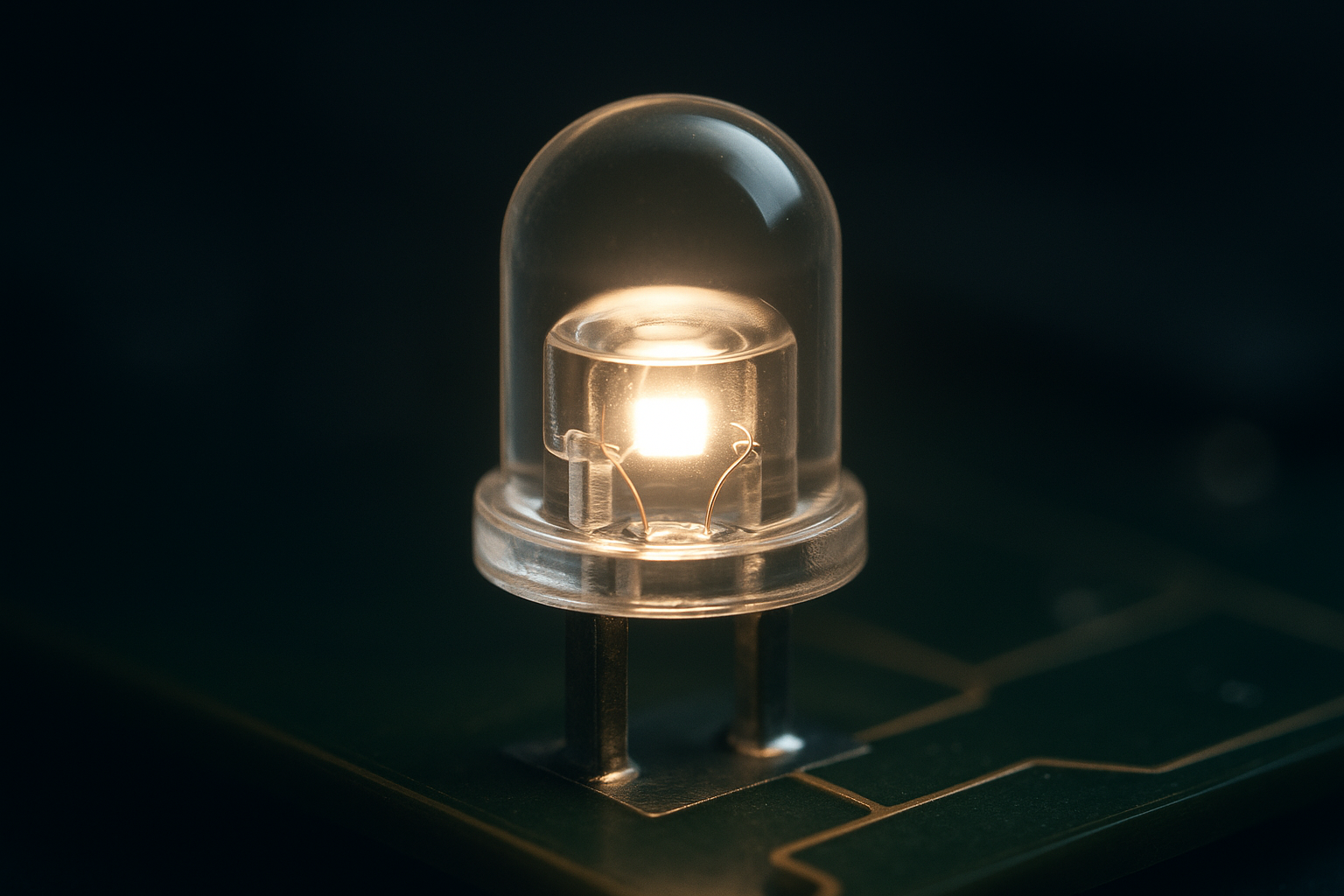
    An LED (short for light-emitting diode) is a small electronic device that produces light when electricity flows through it. Unlike conventional light bulbs, LEDs convert very little energy into heat, which is why they are very energy-efficient and very durable.

    An LED works as follows: It consists of a special semiconductor material that has two layers – one with excess electrons (negative) and one with missing electrons, known as “holes” (positive). When electricity flows through the LED, the electrons migrate from the negative to the positive side and “fall” into the holes.

    When electrons and holes collide, energy is released in the form of light. Unlike lightbulbs, this process generates very little heat, which is why LEDs are so efficient.

    LEDs come in many colors and are used in countless devices: screens, traffic lights, flashlights, Christmas lights, and even car headlights. Thanks to their small size, high efficiency, and fast response time, LEDs are now one of the most important light sources in technology and everyday life.

  • Laser

    Laser

    A laser is a device that generates light that is particularly focused, powerful, and uniform. Unlike normal light, which is scattered in many directions and consists of many different colors, laser light is very sharply focused and, ideally, consists of only one single color.

    Lasers have many practical applications: they are used in CD and DVD players, barcode scanners, laser cutting machines, eye surgery, and measuring devices. Lasers also play an important role in research because their light can be controlled so precisely.

    In quantum physics, lasers are extremely important tools because they can provide the very precise, controlled light needed for experiments at the quantum level.

    Some important applications are:

    1. Cooling and trapping atoms: Lasers can be used to slow atoms down significantly and trap them in a so-called optical lattice or magneto-optical trap. This is necessary in order to study their quantum mechanical properties in detail.
    2. Manipulation of quantum states: Lasers can be used to excite, shift, or bring individual atoms or photons into specific quantum states. This allows quantum computer bits (qubits) to be controlled.
    3. Generation of entangled photons: Laser light is used in special crystals to generate intertwined or entangled photon pairs, which are necessary for quantum communication and quantum cryptography.
    4. Precision measurements: Lasers enable extremely accurate measurements of distances, frequencies, or time units, e.g., in atomic clocks or in the detection of tiny forces and fields.

  • Cryptography

    Cryptography

    Cryptography is the art and science of keeping information secret. It ensures that messages, data, or files can only be read by those for whom they are intended. Traditional methods encrypt text or data in such a way that it becomes incomprehensible to outsiders and can only be decrypted with a special key. One example is the encryption used in online banking or e-mails.

    Quantum cryptography goes one step further: it exploits the special properties of the quantum world, such as single photons and their entanglement. This enables quantum cryptography systems to detect eavesdropping attempts immediately – if someone tries to read the message, the quantum state changes and those involved immediately notice that the connection is no longer secure.

    In short: classical cryptography protects our data today, while quantum cryptography takes the security of future communications to a whole new level – virtually unbreakable thanks to the laws of quantum physics.

  • Optical fiber

    Optical fiber

    An optical fiber is a very thin strand of glass or plastic that can transmit light over long distances. You can imagine an optical fiber as a tiny, transparent tube through which light is “trapped” and can travel with nearly no loss.

    In our everyday world, optical fibers are mainly used for high-speed internet, telephony, and data transmission. Unlike copper cables, optical fibers can transport data much faster and over greater distances. The light signal can carry billions of pieces of information at the same time, enabling very high speeds.

    Optical fibers also play a very special role in quantum physics because they can transport photons – and photons are often used as carriers of quantum information.

    Some important applications:

    1. Quantum communication: Optical fibers enable (entangled) photons to be sent over long distances. This theoretically allows for the establishment of tap-proof communication connections, as every measurement of a quantum state immediately changes the information.
    2. Quantum cryptography: In quantum key distribution (QKD) protocols, information is encoded in individual photons. Optical fibers reliably transport these photons between the sender and receiver.
    3. Quantum computer networks: Optical fibers can connect different quantum computers or quantum memories, allowing quantum information to be exchanged between remote systems.

  • Electron microscope

    Electron microscope

    An electron microscope is a special microscope that uses electrons instead of light to make very small things visible. Normal light microscopes reach their limits when it comes to tiny structures because their light waves are too large to clearly show individual atoms or molecules. Electrons, on the other hand, have a much shorter wavelength, which means that electron microscopes can deliver extremely sharp images – down to individual atoms.

    In a scanning electron microscope (SEM), an electron beam is “scanned” across the surface of the sample, i.e., scanned line by line. When the electrons hit the sample, they collide with the atoms and generate various signals – for example, backscattered electrons or secondary electrons.

    These signals are detected by special detectors and converted into an image that is visible on a screen. This creates a very detailed 3D-like image of the surface of the sample, revealing tiny structures that are far smaller than could be seen with light microscopes.

    An electron microscope can be used, for example, to observe cells, viruses, or material structures on a nanometer scale – i.e., millionths of a millimeter. This makes it an indispensable tool in research, medicine, and materials science for examining the tiny building blocks of our world in greater detail.

  • Electron

    Electron

    An electron is a tiny object that carries a negative electric charge. Electrons move around the nucleus of an atom and determine many properties of materials, such as whether they can conduct electricity or are magnetic. In very simple terms, electrons can be imagined as very small, invisible balls that “orbit” around the atomic nucleus.

    However, quantum physics shows that electrons do not simply travel along fixed paths like small balls. Instead, they behave like waves and particles at the same time. Therefore, one can only specify the probability of where an electron is currently located – it can be in several places at once, so to speak. Electrons can also be entangled, meaning that the behavior of one electron is directly linked to another electron, even if they are far apart.

    This special behavior makes electrons central building blocks of quantum research. They are crucial for quantum computers, quantum communication, and other technologies based on the strange rules of the quantum world.

  • Detector

    Detector

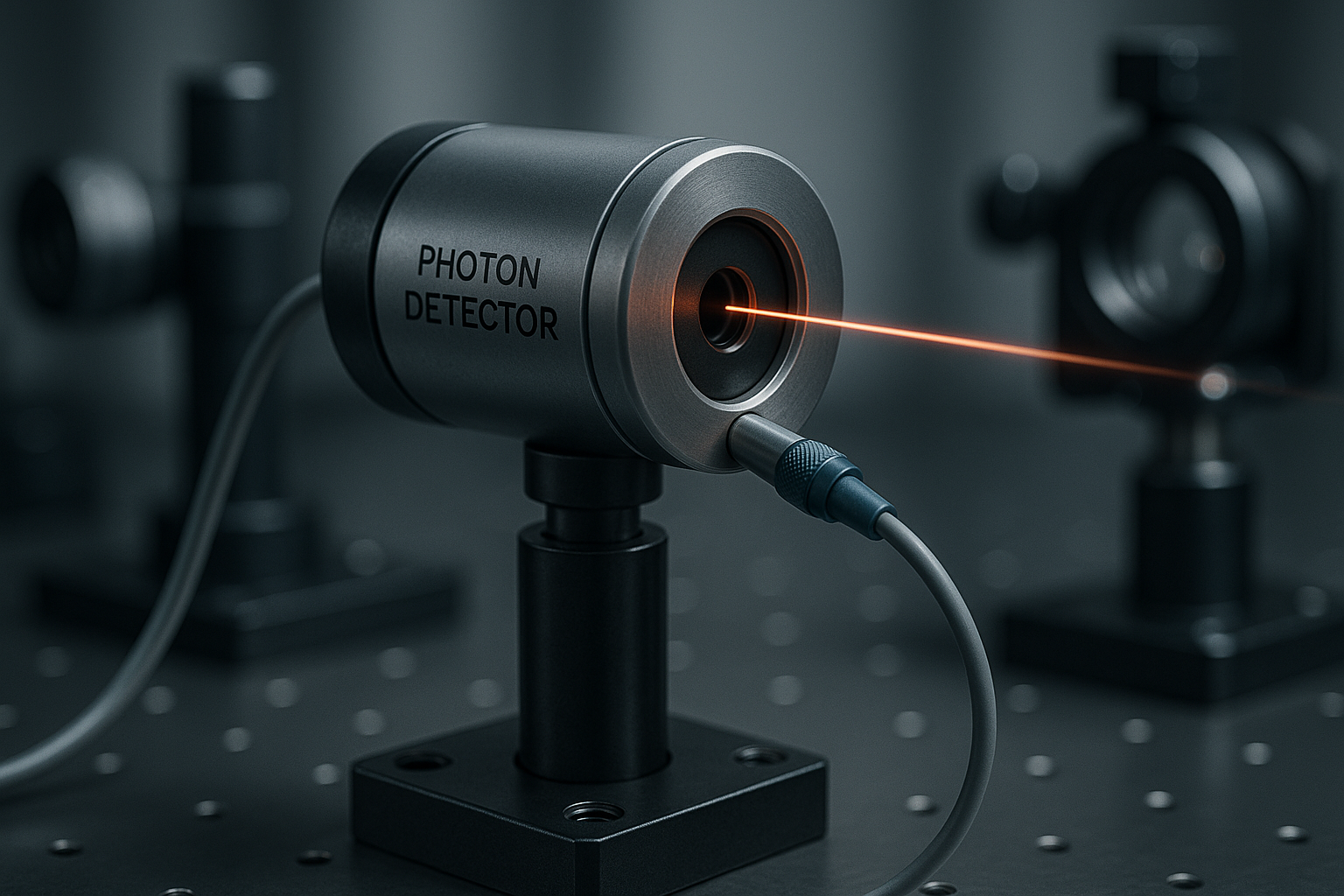
    A detector is a device that tracks, measures, or makes something visible that cannot be seen with the naked eye or detected by our senses. It converts a specific type of signal — such as light, heat, particles, or radiation—into a measurable signal that can then be evaluated. Detectors show us what is happening in our environment, even if it is invisible. The word “detector” comes from the Latin word “detegere,” which means “to uncover” or “to discover.”

    Detectors play a particularly exciting role in quantum physics. This field deals with tiny objects such as electrons or photons that behave very differently from things in our everyday world. Quantum detectors must therefore be extremely sensitive – they can sometimes even detect individual quantum objects.

    Such detectors help researchers explore the special properties of the quantum world – for example, how quantum objects can appear to be in several places at once or be “entangled” with each other. This makes them not only tools for basic research, but also key technologies for future applications such as quantum computers or quantum communication.

  • Computer chip

    Computer chip

    A computer chip is a tiny piece of electronics that functions like the “brain” of a computer or other device. It consists of a very thin silicon wafer on which tiny circuits made of electrical wires are built. These circuits can process, store, and transmit information.

    Computer chips are found almost everywhere today – in cell phones, cars, washing machines, and, of course, computers. They enable devices to calculate data, make decisions, and perform tasks. Although a chip is often only a few millimeters in size, it can contain billions of switching elements.

    In quantum physics, a new type of computer chip is now being developed – the quantum chip. Unlike normal chips, quantum chips work with the strange laws of the quantum world. For example, they can use quantum objects in several states at the same time, which theoretically enables much greater computing power.