


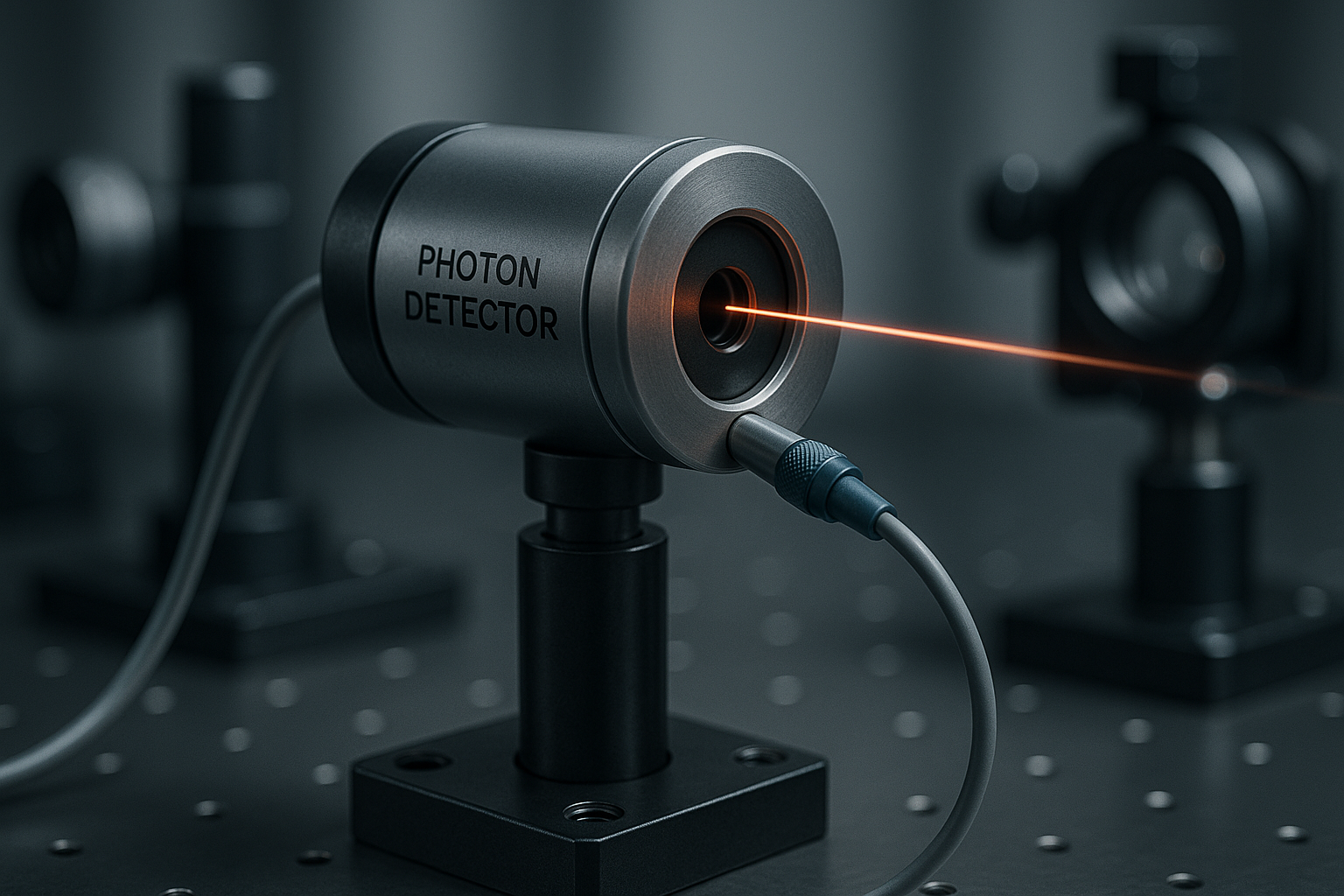
A detector is a device that tracks, measures, or makes something visible that cannot be seen with the naked eye or detected by our senses. It converts a specific type of signal — such as light, heat, particles, or radiation—into a measurable signal that can then be evaluated. Detectors show us what is happening in our environment, even if it is invisible. The word “detector” comes from the Latin word “detegere,” which means “to uncover” or “to discover.”
Detectors play a particularly exciting role in quantum physics. This field deals with tiny objects such as electrons or photons that behave very differently from things in our everyday world. Quantum detectors must therefore be extremely sensitive – they can sometimes even detect individual quantum objects.
Such detectors help researchers explore the special properties of the quantum world – for example, how quantum objects can appear to be in several places at once or be “entangled” with each other. This makes them not only tools for basic research, but also key technologies for future applications such as quantum computers or quantum communication.