


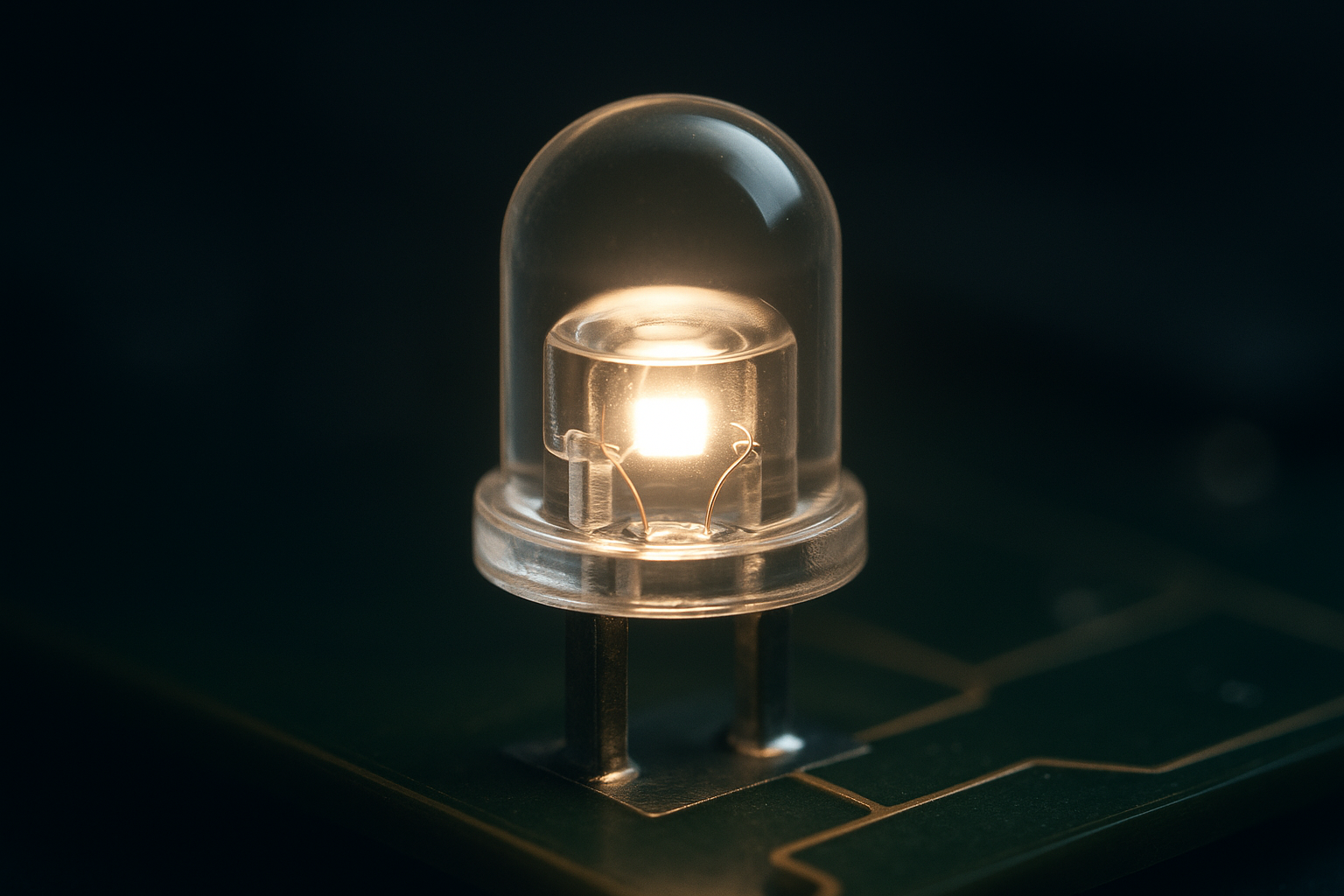
An LED (short for light-emitting diode) is a small electronic device that produces light when electricity flows through it. Unlike conventional light bulbs, LEDs convert very little energy into heat, which is why they are very energy-efficient and very durable.
An LED works as follows: It consists of a special semiconductor material that has two layers – one with excess electrons (negative) and one with missing electrons, known as “holes” (positive). When electricity flows through the LED, the electrons migrate from the negative to the positive side and “fall” into the holes.
When electrons and holes collide, energy is released in the form of light. Unlike lightbulbs, this process generates very little heat, which is why LEDs are so efficient.
LEDs come in many colors and are used in countless devices: screens, traffic lights, flashlights, Christmas lights, and even car headlights. Thanks to their small size, high efficiency, and fast response time, LEDs are now one of the most important light sources in technology and everyday life.